


Hawaiian-Inspired Smoked Pork Belly Dishes That Elevate Private Chef Events
- Jun 11
- 6 min read

Smoked pork belly is one of those dishes that guests on Maui never forget. Maybe you're planning a private dinner at a villa in Lahaina and want something that feels genuinely local. Or maybe you're wondering what separates a truly memorable private chef event from a good one. A lot of the time, it comes down to the protein and how it's prepared.
When smoked pork belly is done right, it doesn't just feed people. The right native wood, real island ingredients, and intentional plating tell a story about where they are.
Why Smoked Pork Belly Works So Well in Hawaiian Cuisine
The Role of Pork in Hawaiian Food Culture
Pork has been central to Hawaiian cooking for centuries. The most iconic example is the traditional imu. It's an underground pit where a whole pig is slow-roasted over lava rocks and kiawe wood. Wrapped in banana leaves for hours, the result is kalua pig. Tender, smoky, and deeply tied to the land.
That tradition didn't disappear. It evolved. Modern private chefs across Maui carry that same philosophy forward. They use contemporary techniques while staying anchored to the flavors that make Hawaiian food what it is.
Smoked pork belly has become the premium cut for elevated versions of these dishes. It offers a richer, more refined experience than the pulled pork presentations most guests are used to.
What Makes Pork Belly the Right Cut for Private Events
Pork belly has a higher fat-to-meat ratio than pork shoulder or butt. That matters when cooking low and slow. The fat renders during the smoking process. It bastes the meat from within, producing a silky, layered texture that holds beautifully on a plate.
For a private chef event, presentation is everything. Smoked pork belly can be sliced cleanly, portioned precisely, and plated with intention. It absorbs smoke and marinade more evenly than thicker cuts. Every bite delivers consistent flavor. That consistency matters, whether guests are seated at a villa in Wailea or on a deck in Lahaina.
The Hawaiian Flavor Profile Behind Smoked Pork Belly
Native Woods and Their Aromatic Impact
Wood choice is one of the biggest differentiators between mainland BBQ and genuine Hawaiian smoked meat. Two native options stand out:
Kiawe — a native Hawaiian tree closely related to mesquite. It burns hot and produces a dense, earthy smoke with a slightly sweet edge.
Strawberry guava wood (waiawi) — adds a tart, fruity note that pairs naturally with the sweet marinades common in Hawaiian cooking.
Most smoked pork belly recipes online skip wood selection entirely. They default to generic fruitwoods or hickory. On Maui, the wood is part of the flavor profile, not an afterthought.
Island Ingredients That Define the Marinade
The foundation of Hawaiian smoke meat has always been shoyu, brown sugar, fresh ginger, and garlic. For a private chef menu, that base gets elevated with locally sourced ingredients. Here's what sets a Maui-specific marinade apart:
Maui sweet onion — brings mellow, caramelized depth
Red alaea salt — harvested from Hawaiian volcanic clay, adds mineral quality and a distinctive pink color
Fresh pineapple — provides natural acid and sweetness that cuts through the richness of the smoked pork belly
Lilikoi (passion fruit) — works as a glaze component and finishing sauce, adding brightness that rounds out the smokiness
These aren't just flavor additions. They're a direct connection to the farms and volcanic soil of Maui. That's exactly the approach a thoughtful private chef brings to every custom menu.
Smoked Pork Belly Preparations for a Private Chef Menu
Kalua-Style Smoked Pork Belly with Banana Leaf
Wrapping pork belly in banana leaves before smoking honors the imu tradition. It's also practical for a modern kitchen or outdoor setup. They create a gentle steam environment inside the smoke.
The result is smoked pork belly with the earthy depth of traditional kalua cooking. It holds the structural integrity needed for a plated centerpiece. For a villa dinner or sunset event along the Lahaina coastline, this preparation works as a showpiece. It's carved tableside or presented on a board with island accompaniments.
Shoyu-Glazed Smoked Pork Belly with Maui Onion
This is a refined take on Hawaiian smoke meat. The smoked pork belly is finished with a shoyu and guava jelly reduction. It glazes the surface as the meat rests. Caramelized Maui sweet onions are served alongside. Their natural sugars draw out over low heat until jammy and almost translucent.
The combination is savory, sweet, and slightly smoky. It works equally well as an appetizer course or a featured pupu at a celebration dinner.
Pineapple-Lacquered Smoked Pork Belly
Fresh Maui pineapple does two things well in this preparation. It acts as a basting glaze during the final phase of smoking. The result is a sticky, caramelized crust on the exterior. It also works as an acid-forward accompaniment on the plate. It cuts through the fat and refreshes the palate between bites.
The balance is what guests remember. Smoke and sweetness, richness and brightness, all from ingredients grown on the island. This format works across the full menu. From spoon presentations as a pupu to plated entrees for a formal dinner. The smoked pork belly holds up across all of it.
Plating Smoked Pork Belly for an Upscale Private Dining Setting
Accompaniments Rooted in Hawaiian Ingredients
The sides that accompany smoked pork belly at a private chef dinner on Maui aren't afterthoughts. They're part of the story. Strong local pairings include:
Coconut jasmine rice — fragrant, slightly sweet, pairs naturally with the smokiness of the pork
Pohole fern salad — made from native Hawaiian fiddlehead ferns, adds a crisp, earthy contrast
Taro purée — creamy and starchy, with real local character
Griddled cornbread with guava butter — warm and indulgent, ties the plate together
These pairings feel distinctly Hawaiian without being kitschy. They reflect the land, and they give the meal a sense of place beyond the food itself.
Presentation Approaches for a Multi-Course Event
How smoked pork belly is portioned and presented depends on where it falls in the menu:
Pupu course — thin slices on a tasting spoon with a dot of lilikoi sauce and a microgreen garnish
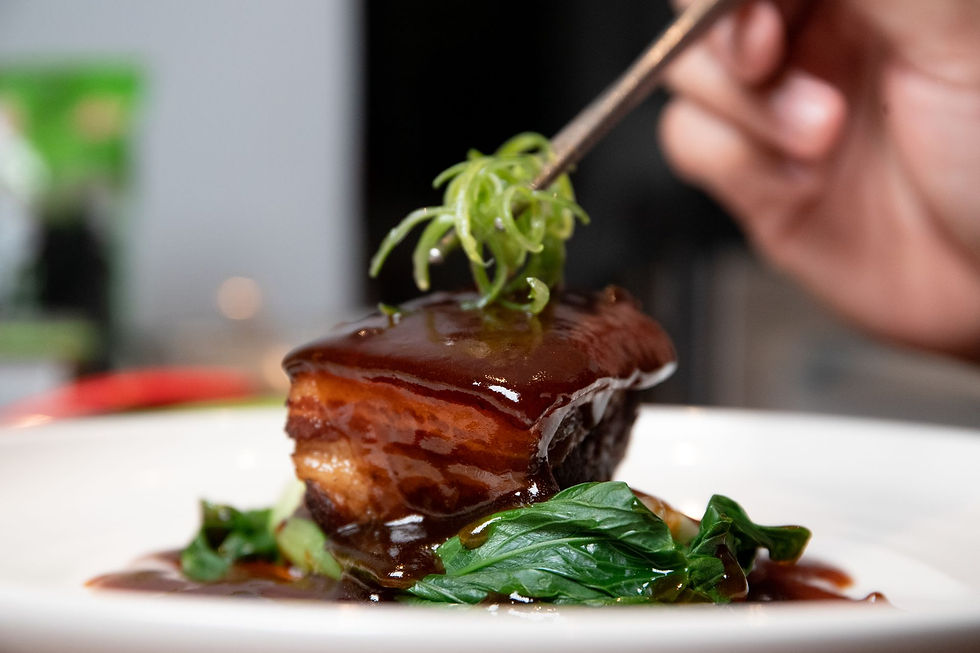
Composed entree — a thick slab against a swipe of taro purée, flanked by pohole fern salad and a drizzle of shoyu-guava reduction
Family-style celebration — carved portions arranged on a board with accompaniments alongside
Each format delivers a different experience. A skilled private chef builds the progression intentionally.
Incorporating Smoked Pork Belly into a Custom Private Chef Event on Maui
A private chef on Maui doesn't just cook a dish. The whole experience is designed around the guests. It starts with the menu and works outward to the setting, the pacing, and the sourcing.
Smoked pork belly works as a menu anchor because it's substantial without being limiting. It pairs naturally with Hawaiian seafood courses before it and lighter, fruit-forward desserts after. It also scales well. An intimate tasting menu or a family-style setup with communal boards, both work.
Chef Jason Raffin's approach covers the full experience. He sources fresh local ingredients
from Maui's farms and markets. He cooks on-site at the villa or venue. Each menu is designed around guest preferences and dietary needs. Across Lahaina, Wailea, Kihei, and the full island, each event is built around the people at the table. Not a preset formula.
That's what a private chef Maui experience actually means. Personal, intentional, and rooted in this specific place.
Smoked Pork Belly as a Signature of Hawaiian Private Dining
Done well, smoked pork belly is one of the most compelling proteins a private chef can serve. It carries centuries of Hawaiian culinary tradition. It rewards proper technique and quality local ingredients. And it creates the kind of moment that guests talk about long after leaving Maui.
The difference between a good private dinner and an unforgettable one comes down to details. Wood selection, marinade sourcing, the intention behind every element on the plate. If you're planning a Maui event and want smoked pork belly on the menu, reach out to Chef Jason Raffin. Start building your custom experience today.
Frequently Asked Questions (FAQs)
1. What type of wood is best for smoking pork belly in a Hawaiian style?
Kiawe wood is the most authentic choice. It's native to Hawaii, closely related to mesquite, and produces a dense, slightly sweet smoke. Strawberry guava wood (waiawi) is also traditional and adds a tart, fruity note. Both are distinct from the fruitwoods or hickory common in mainland BBQ.
2. How is smoked pork belly different from kalua pork?
Kalua pork traditionally uses pork shoulder, shredded after slow roasting in an underground imu pit. Smoked pork belly uses a fattier cut that holds its shape when sliced. It's better suited for plated presentations and multi-course private dinners. The flavor profiles overlap, but pork belly offers a more refined texture.
3. Can smoked pork belly be served at different points in a tasting menu?
Yes. It works as a pupu on a tasting spoon, as a centerpiece entree, or as part of a family-style spread. Portioning and accompaniments change depending on placement in the menu. The cut adapts well across all formats.
4. What local Maui ingredients pair best with smoked pork belly?
Strong pairings include Maui sweet onion, red alaea salt, fresh pineapple, lilikoi, pohole fern, taro, and coconut jasmine rice. All sourced locally on Maui, they add authenticity that generic sides can't replicate.
5. How does a private chef on Maui customize a menu around smoked pork belly?
A private chef builds the full progression around it, pairing lighter seafood courses before and fruit-forward desserts after. Dietary preferences, guest count, venue type, and event style all shape the final menu. Chef Jason Raffin handles sourcing, prep, cooking, and cleanup on-site.


Comments