


Why Pan Roasted Chicken Remains a Timeless Fine Dining Favorite
- 2 days ago
- 7 min read
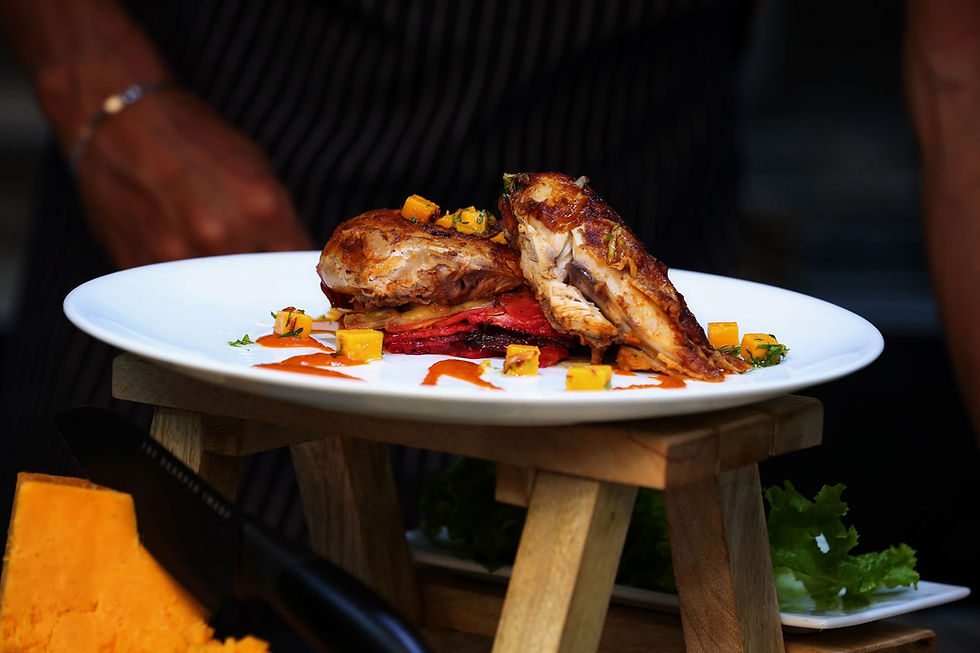
Pan roasted chicken is one of those dishes that never disappears from serious menus. There is a real reason for that. It is not nostalgia. Pan roasted chicken rewards skill and demands good ingredients.
It delivers results that are genuinely hard to replicate any other way. If you have tasted perfectly crisped, golden-skinned chicken at a private dinner and wondered why it hits differently. The answer starts with the technique.
The Technique Behind the Dish
Most people think of chicken as straightforward. It is not. Cooking it well, to the standard of a private dining table, requires understanding what is actually happening. In the pan, every decision matters.
Pan roasting is a two-stage method. You start on the stovetop at high heat. Then the whole pan transfers into a preheated oven to finish. It sounds simple. But professional kitchens rely on it because each stage does something the other cannot.
Stovetop Sear vs. Oven Roast: Why Both Steps Matter
The sear is where the flavor starts. When the skin hits a properly heated pan, the Maillard reaction begins. Proteins and sugars on the surface break down and recombine under heat, producing hundreds of new flavor compounds. That deep, golden-brown crust is not just visual. It is flavor.
For this to happen properly, the skin needs to be completely dry. Moisture on the surface steams before it browns. A wet surface delays crisping and leaves you with skin that looks cooked but feels soft.
The stovetop sear also builds fond, the browned bits that stick to the pan. Those bits become the base of the pan sauce. Nothing from that pan gets wasted.
Once the skin is golden, the pan goes into the oven. Even, dry heat finishes the interior without overcooking the exterior. The result is chicken that is juicy at the center and crackling at the surface. That balance is what makes pan roasted chicken so difficult to achieve by oven alone or stovetop alone.
Why Fine Dining Menus Keep Coming Back to Pan Roasted Chicken
Chicken has a reputation problem in some dining circles. People assume it is the safe, uninspired choice. But the opposite is true at the highest level of cooking. Pan roasted chicken is one of the most technically demanding chicken dishes a chef can put on a menu.
There is nowhere to hide:
Soft skin cannot be rescued by sauce
Dry interior cannot be masked by plating
Weak pan sauce exposes a lack of technique
Every element has to be right. Guests can tell immediately whether it is. That transparency is exactly why serious chefs respect the dish. It is also deeply satisfying to eat. That is why it keeps appearing on tasting menus and private dining tables across the country.
From French Bistros to Private Tables
The roots of this dish run through classical French cuisine. Poulet rôti, roasted chicken with pan juices, has been a cornerstone of French cooking for generations. Thomas Keller has called roast chicken a true measure of a cook's ability. Few dishes test a chef as honestly.
That legacy matters. Pan roasted chicken entered fine dining not as a trend but as a standard. Because it is built on technique rather than fashion, it has outlasted every food trend around it.
For a private chef working in Maui, that classical foundation translates beautifully to an intimate dinner. The dish scales gracefully from a casual beachside meal to a full multi-course tasting experience.
What Makes a Pan Roasted Chicken Truly Restaurant-Quality
That gap is decided before the pan even heats up. Most guides treat pan roasted chicken as a formula. Professional kitchens treat it as a standard.
Here is what actually separates the two:
Ingredient quality. Free-range or pasture-raised poultry has better fat distribution and more complex flavor. Air-chilled birds have drier skin from the start, giving the Maillard reaction a head start.
Advance seasoning. Salt applied the night before draws moisture to the surface, then back into the meat. It seasons the interior and helps dry the skin at the same time.
Proper resting. Cutting into the chicken right out of the oven lets the juices run out. A rest of eight to ten minutes allows moisture to reabsorb throughout the meat.
The Role of Sourcing in Pan Roasted Chicken
For Chef Jason Raffin, sourcing is not a talking point. It is the starting point. He builds menus around what is fresh from local farms and markets. His reach covers Lahaina, Wailea, and the wider island. The pan roasted chicken on a Chef Jason menu reflects that philosophy directly.
Hawaiian-grown produce, local herbs, and responsibly sourced poultry produce results that differ from anything on a mainland menu. The ingredients carry the environment they came from. That shows on the plate.
When the sourcing is right, pan roasted chicken does not need to be complicated. A well-sourced bird, cooked properly, is its own argument.
Pan Choice, Heat Control, and Finishing
Cast iron is the preferred pan for professional applications. It retains heat evenly and holds surface temperature when the cold chicken makes contact. Stainless steel also works well and makes deglazing slightly easier. Avoid thin, non-stick cookware. It cannot hold the heat required to sear properly.
The pan must be genuinely hot before the chicken goes in:
A drop of water should skitter and evaporate on contact
Oil should shimmer visibly
The chicken should make a sound the moment it hits the surface
Oven temperature for finishing runs between 375 and 425 degrees Fahrenheit. Bone-in pieces do well at a lower temperature with more time. Boneless skin-on cuts finish faster and can handle more heat.
Plating and Accompaniments for a Fine Dining Presentation
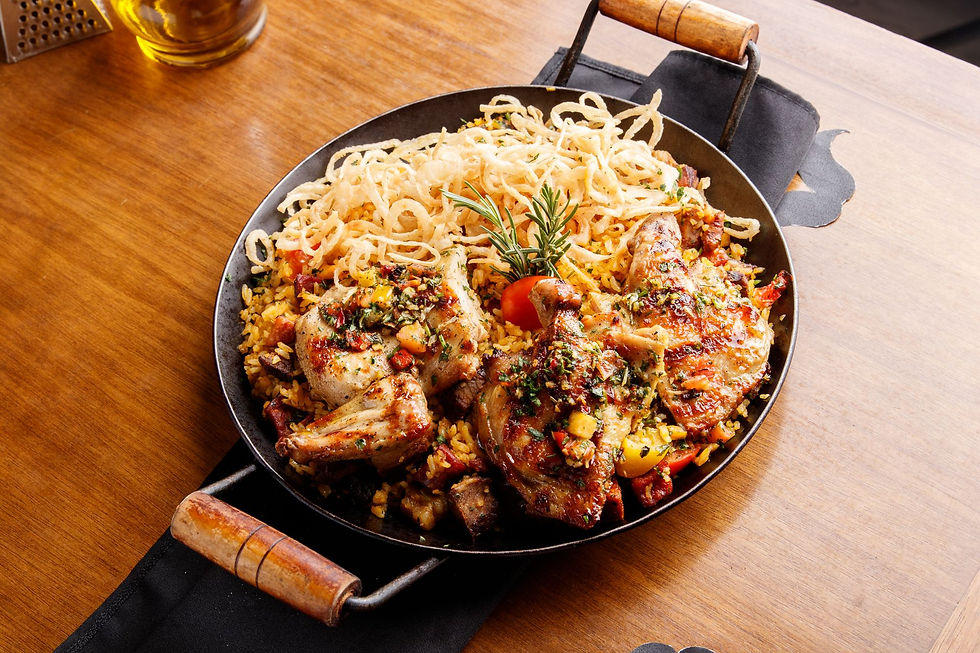
Cooking the chicken well is half the work. How it is finished and presented is what separates a good plate from a memorable one.
The pan sauce is the most immediate opportunity. Once the chicken is resting, the hot pan still holds the fond and rendered fat. Do not rinse it away.
Pan Sauce Fundamentals
Deglaze the pan with stock or white wine, scraping the browned bits from the bottom. Let it reduce over medium heat until it thickens slightly. Finish with cold unsalted butter, swirled in off the heat. The result is a glossy, velvety sauce that carries the full flavor of the sear.
Fresh herbs at the finish, thyme, tarragon, or flat-leaf parsley, give the sauce lift. They complement rather than compete.
Seasonal Sides and Island-Inspired Accompaniments
Pan roasted chicken works well with seasonal accompaniments. In Maui, that means drawing from what the island offers:
Roasted Maui sweet onions
Locally grown root vegetables
Fresh herbs from small island farms
Light citrus reductions or macadamia nut oil
Nasturtium garnish from local growers
The dish stays classical in structure but reflects exactly where it was made. That sense of place is something only a private dining experience in Maui can offer.
Bringing Pan Roasted Chicken to a Private Dining Experience in Maui
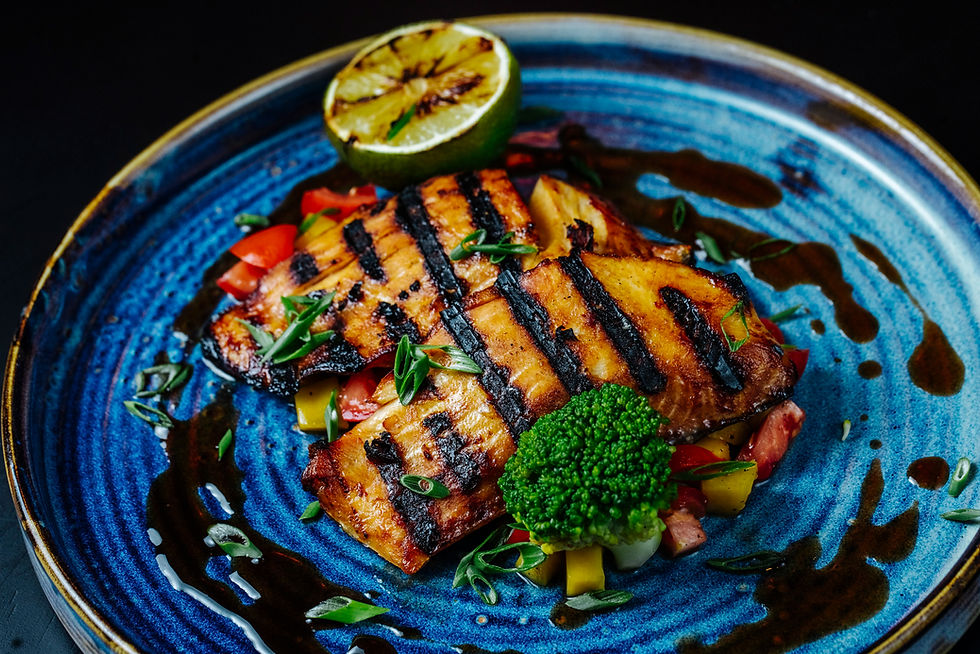
Imagine sitting down to dinner at a villa in Lahaina or Wailea. The table is set. Then a plate arrives. Pan roasted chicken, golden and crackling, plated over seasonal vegetables. A pan sauce you can smell before it lands.
That is the kind of experience Chef Jason Raffin builds around this dish. Not a simplified version of fine dining, but the real thing. Executed in your space. Ingredients sourced that morning. Plated with the precision of a full tasting menu.
Guests who book a private chef in Maui are not looking for the ordinary. A properly executed pan roasted chicken, built on classical technique and Hawaiian ingredients, delivers exactly that.
Chef Jason handles everything: shopping, preparation, cooking, plating, and cleanup. All you do is sit down and enjoy.
A Dish Worth Returning To
Pan roasted chicken has earned its place on serious menus. It asks something of the cook and rewards the guest. It is built on technique, sourcing, and intention. Every one of those elements shows up clearly in the final plate.
For guests visiting Maui, pan roasted chicken is the dish that stays with you. It reflects classical craft and genuine island flavors in every bite. It is the meal you talk about on the way home, and the reason you book again.
Reach out to Chef Jason Raffin and build your custom Maui menu. Pan roasted chicken is waiting.
Frequently Asked Questions (FAQs)
1. What is pan roasted chicken and how is it different from regular roasted chicken?
Pan roasted chicken uses a two-stage method: a high-heat stovetop sear, then finishing in the oven. Regular roasted chicken goes directly into the oven. The sear develops a crispier, more flavorful crust through the Maillard reaction. Oven heat alone cannot replicate that result.
2. Why is pan roasted chicken considered a fine dining dish?
It requires precise heat control, quality ingredients, and good timing. The skin must be perfectly crisped, the interior fully cooked but moist, and the pan sauce properly built. That level of execution is what makes it a benchmark dish in professional kitchens.
3. How do you get crispy skin on pan roasted chicken?
Pat the chicken completely dry before cooking. Season it in advance if possible. Use a hot, heavy pan, cast iron preferred, and do not move the chicken once it goes in. Let the Maillard reaction work undisturbed until the skin releases naturally from the surface.
4. What sides go well with pan roasted chicken?
Classical pairings include roasted root vegetables, fresh herb pan sauce, and creamy potato preparations. In Maui, sweet onions, citrus reductions, and seasonal island greens bring a sense of place to the plate. None of it overcomplicates the dish.
5. Can I request pan roasted chicken as part of a private chef menu in Maui?
Yes. Chef Jason Raffin builds fully custom tasting menus for private dining across Lahaina, Wailea, and the wider island. Dishes are crafted around your preferences and sourced from local Hawaiian farms and markets. Reach out through jasonraffin.com to begin planning your experience.
Comments